
If you’ve spent any time exploring Germany’s wine regions, you may have come across a sign with a broom hanging outside and wondered what on earth it means. The answer? You’ve probably just found a Besenwirtschaft!
A Besenwirtschaft is one of Germany’s most charming wine traditions and one that many visitors and expats don’t discover until they’ve been living here for years. These seasonal wine taverns pop up for just a few weeks at a time, serving local wines, regional dishes, and a uniquely authentic glimpse into German wine culture. If you’ve been looking for a wine experience that feels more local than touristy, this might just become your new favorite tradition.
- What Is a Besenwirtschaft?
- Why Germans Love Besenwirtschaften
- How to Spot a Besenwirtschaft
- Besenwirtschaft vs. Straußwirtschaft: What's the Difference?
- What Food and Wine Can You Expect?
- When Is the Best Time to Visit a Besenwirtschaft?
- How to Find a Besenwirtschaft Near You
- Why Every Wine Lover Should Visit a Besenwirtschaft

What Is a Besenwirtschaft?
A Besenwirtschaft is a seasonal wine tavern operated by a local winery or winemaker. For a limited time each year, wineries open their doors and transform part of their property into a casual restaurant where guests can enjoy the estate’s wines alongside simple regional food. Unlike a traditional restaurant, a Besenwirtschaft isn’t open year-round. Most operate for only a few weeks at a time, often during the spring and autumn months.
The name comes from the German word Besen, meaning broom. Traditionally, a broom was hung outside the entrance to signal that the tavern was open for business. So if you’re wandering through wine country and spot a broom hanging outside a winery? That’s your invitation to stop in for a glass.
🍷 Sip Tip: Besenwirtschaften often only open for a few weeks at a time, which means it’s easy to miss the good ones. Join our free What’s Sippening newsletter for seasonal wine events, Besenwirtschaft openings, wine festivals, and hidden wine experiences happening across Europe.
Why Germans Love Besenwirtschaften
Part of the appeal of a Besenwirtschaft is how wonderfully unpretentious it feels. There’s no pressure to know wine terminology. Instead, you’ll find long communal tables, local families, groups of friends, and visitors all enjoying wine directly from the producer. Many Germans grow up visiting Besenwirtschaften and return year after year when their favorite wineries open for the season. For visitors, it’s one of the easiest ways to experience German wine culture beyond the tasting room.
You’ll often find:
- Estate-grown wines
- Seasonal regional dishes
- Casual, welcoming atmospheres
- Direct interaction with the winery
- Affordable prices compared to traditional restaurants

How to Spot a Besenwirtschaft
The easiest clue is, of course, the broom. Traditionally, wineries would hang a broom outside to signal they were open and serving wine. Today, many Besenwirtschaften also advertise online, but you’ll still see the broom tradition throughout Germany’s wine regions.
Other signs to look for include:
- Outdoor seating filled with locals
- Chalkboard menus
- Temporary opening dates posted outside
- Winery signage with seasonal food offerings
- Lots of people carrying wine glasses and looking very happy
Unlike traditional restaurants, these establishments often operate on limited schedules, so checking opening dates in advance is always a good idea.
🍷 Sip Tip: The wines poured at Besenwirtschaften are often made by small, family-run producers. If that’s your kind of sipping, you’ll love the Sippers Club. Each month features carefully selected wines from independent European wineries, paired with a virtual tasting led by the people behind the bottles.
Besenwirtschaft vs. Straußwirtschaft: What’s the Difference?
Here’s where things get confusing for expats. Depending on where you are in Germany, you may hear different names used for essentially the same experience.
Around Stuttgart
You’ll most commonly hear:
- Besen
- Besenwirtschaft
In the Pfalz and Near Ramstein
You’ll often hear:
- Strauße
- Straußwirtschaft
During Spring
Some wineries may refer to their seasonal opening as a:
- Maienwirtschaft
The names vary by region, but the concept remains largely the same: local wineries opening temporarily to serve their own wines and regional food directly to guests. So don’t worry too much about the terminology. If you see any of these names, chances are you’ve found exactly the kind of wine experience you’re looking for.

What Food and Wine Can You Expect?
One of the best parts of visiting a Besenwirtschaft is that the menu typically reflects the local region. The food isn’t designed to be fancy. It’s designed to pair beautifully with the winery’s wines.
Depending on where you’re visiting, you might find:
In the Pfalz
- Flammkuchen
- Saumagen
- Bratwurst
- Regional cheese boards
In Württemberg
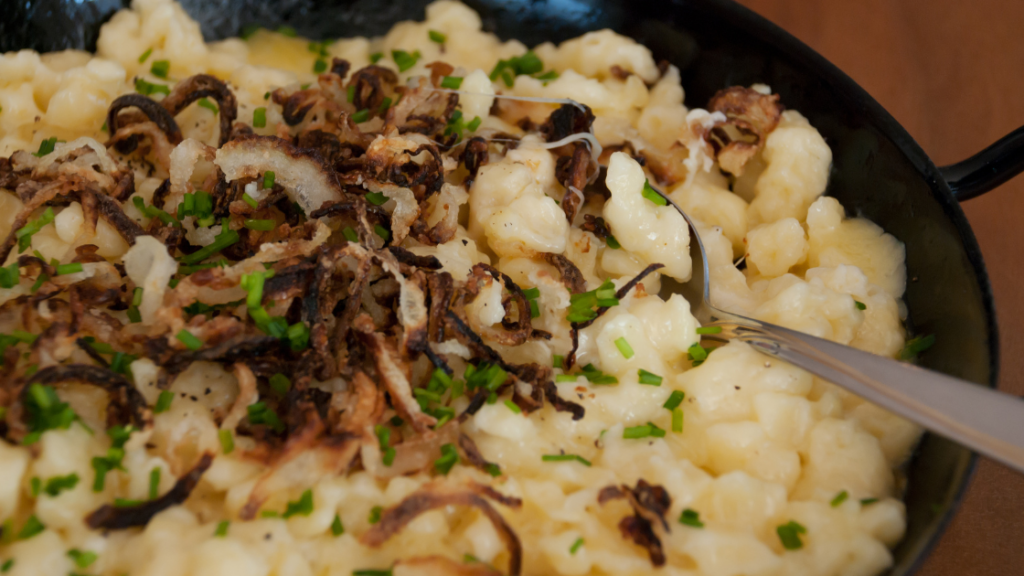
- Maultaschen
- Potato salads
- Traditional Swabian dishes
Across Germany
Expect hearty comfort food, seasonal specialties, and dishes that have been served alongside local wines for generations. As for the wine, you’ll typically be drinking wines produced just steps away from your table.
Many wineries serve a mix of:
- Riesling
- Silvaner
- Grauburgunder
- Weissburgunder
- Spätburgunder
- Regional specialties
It’s one of the freshest ways to experience German wine.
🍷 Sip Tip: Planning to visit a Besenwirtschaft? Download our free Expat Guide to Ordering Wine in Germany so you’ll know exactly what Trocken, Feinherb, and Spätlese mean before your first glass hits the table.
When Is the Best Time to Visit a Besenwirtschaft?
Because Besenwirtschaften are seasonal, timing matters.
Most wineries open during:
Spring
As temperatures warm up and vineyard season begins, many wineries open their seasonal taverns for several weeks.
Autumn
Harvest season is another popular time, with many wineries opening after the grape harvest and during Germany’s beautiful fall wine season.
Because opening dates vary by winery, it’s worth checking local winery websites, social media pages, or community groups before making a trip. Part of the charm is that these experiences are temporary. If you miss them, you may need to wait until the next season rolls around.
How to Find a Besenwirtschaft Near You
One of the easiest ways to find a Besenwirtschaft is simply by spending time in Germany’s wine regions. But if you’re not sure where to start, there are a few easier options:
- Ask local wineries
- Join wine-focused Facebook groups
- Follow regional tourism boards
- Keep an eye out for seasonal winery announcements
- Ask fellow wine lovers for recommendations
🍷Sip Tip: Looking for a Besenwirtschaft recommendation near you? Join our free Wine Tasting Friends Facebook group, where expats across Germany share local wine events, hidden gems, and winery recommendations throughout the year.
Why Every Wine Lover Should Visit a Besenwirtschaft
If you’re looking for the polished, curated wine tourism experience, Germany has plenty of those. But if you want to experience the side of German wine culture that locals actually look forward to every year, a Besenwirtschaft is hard to beat! Between the estate wines, regional food, and welcoming community atmosphere, it’s one of the easiest ways to experience German wine culture like a local. So the next time you’re exploring Germany’s wine regions and spot a broom hanging outside a winery, take it as your sign to stop. You might just find your new favorite wine experience.